Physics Arcade Ultimate
Six zones, one run: gravity, bounce, balance, motion, collision and force.
Physics Arcade Games — push, bounce, launch and experiment. Play free physics-based arcade games directly in your browser. Work with gravity, momentum, collisions, balance and motion while solving challenges and chasing high scores.
Games you opened recently on this device.
Eight games that show what the engine can do — one from every category, plus the flagship.
Six zones, one run: gravity, bounce, balance, motion, collision and force.
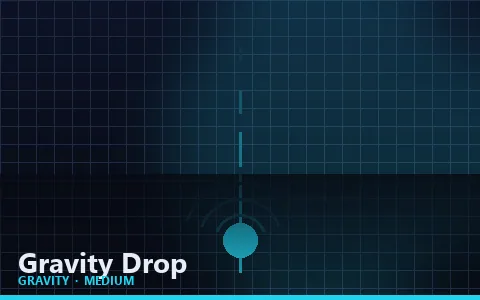
Fall through a shaft of solid platforms while a rising hazard line chases you down.
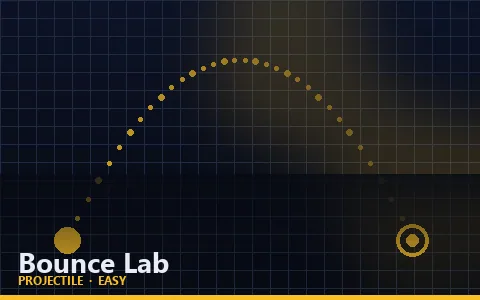
Fire an elastic orb into a chamber and clear the targets with the bounces you have left.
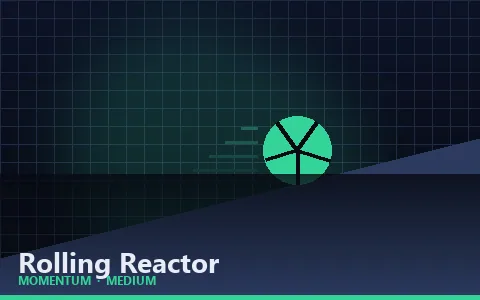
Roll a heavy sphere over hills and gaps, using downhills to earn the next climb.
Thread a probe between gravity wells, collecting rings without crashing or escaping.
A sandbox with a job to do: spawn, flick, change gravity, fill the collector.
Six families of physics game, split by which property of motion you have to manage.
Games where the pull of the field is the main thing you have to manage — falling, floating, flipping and orbiting.
5 gamesStacking, tilting and building — games decided by where the centre of mass sits relative to the base holding it up.
5 gamesLaunching, arcing and ricocheting — games where the shot leaves your hands and physics decides the rest.
5 gamesImpacts, chain reactions and everything that happens when one moving object meets another.
5 gamesRolling, sliding, swinging and drifting — games about building speed and then not wasting it.
5 gamesSet up the conditions, hit go, and let the simulation resolve it — puzzles solved by arranging forces rather than by reflexes.
5 gamesThe most recently added titles in the catalogue.
Fall through a shaft of solid platforms while a rising hazard line chases you down.
Thread a probe between gravity wells, collecting rings without crashing or escaping.
Ranked by how often you have opened each game in this browser. Physics Arcade keeps no global play counters.
Let the catalogue choose. Every pick is a real, finished, playable game — never a placeholder.
What you actually practise when the simulation is doing the work.
Every game rewards trying something and watching what happens. The failure states are informative rather than arbitrary, so a lost run tells you what to change.
Pendulums, moving platforms and swinging bobs all have periods you can read. Timing here means reading a pattern, not reacting quickly.
Physics puzzles ask you to arrange conditions and predict the result. There is usually more than one valid answer, and the elegant one scores higher.
Speed you have already built is the most valuable thing in most of these games. Learning to spend it well is the core skill of the whole genre.
Some games do ask for quick hands — but far fewer than you would expect. Most of the catalogue rewards committing earlier rather than reacting faster.
Route choice, resource budgets and shot selection matter more than execution in the majority of these games.
Aiming, charging and steering with one input each, then combining them, is a genuine skill the flagship builds towards.
What you learn in one game works in the next, because they all run the same simulation. It is the opposite of memorising a level.
Plain-English explanations of the physics these games are built on.
What physics arcade games are, how the six main types differ, what the simulation is actually doing, and how to get good at them. A complete guide.
A clear definition of physics arcade games, how they differ from ordinary arcade games, what the simulation does, and who they are for.
A clear look at what a game physics engine actually does each frame: integration, collision detection, collision response and why timesteps matter.
How gravity works in physics games: constant acceleration, terminal velocity, directional and reversed fields, gravity wells, and how to play around them.
What momentum is, why it makes physics games feel different, how it transfers in collisions, and how to use it rather than fight it.
How games detect collisions, what a contact normal is, how impulses resolve an impact, and why stacks need the solver to run several times per step.
Physics Arcade is a free library of original HTML5 physics games and the writing that explains them. Every game here was built for this site, runs on the same custom physics engine, and works in any modern browser without a download, a plugin or an account.
The catalogue is organised by which property of motion you have to manage. Gravity games make the field itself the variable. Balance games come down to whether the centre of mass sits over the base. Projectile games are about angle and speed. Collision games are about what transfers on impact. Momentum games are about the speed you already have. Physics puzzles let you arrange the conditions and then watch the simulation decide.
Alongside the games there are 20 long-form guides covering the physics itself — gravity, momentum, collisions, friction, restitution and more. They are written for people with no physics background, and they are explicit about where arcade physics departs from the real thing.
Physics Arcade games use simplified, tuned physics built for playability. They are not scientific simulations: forces, masses and timings are chosen because they feel good at 60 frames per second, not because they match measured values. Where a game departs from real-world behaviour in a way that matters, the game page says so.
Physics arcade games are browser games in which movement is produced by a simulation rather than by scripted animation. Objects have mass, accelerate under forces, carry momentum and collide, so the physics itself is the source of the challenge.
Yes. All 30 games are free to play, run directly in your browser, and need no download, plugin or account. The site is supported by advertising rather than by charging for games.
Gravity is a constant acceleration, not a speed — falling objects keep getting faster. It is also a direction, which is why games can reverse it, rotate it, or make it point towards a planet.
Momentum is mass times velocity — practically, how hard something is to stop. It is why a physics character cannot halt instantly and why speed you have already built is worth protecting.
Yes. Every game supports touch, and games that need directional control show real on-screen buttons below the play area rather than drawing them over the game.
No. Every game is HTML5 and runs in the browser tab you already have open. Any site asking you to install something to play a browser game should be treated with suspicion.
They build genuine intuition about how physical relationships behave — what happens when you double something. They do not teach accurate numbers, because arcade physics is tuned for playability, and every game page here says where its model is simplified.
Best scores, favourites and play history are saved in your own browser using localStorage. There is no account and no global leaderboard, and clearing your browser data clears them.