Pillar guide
The Ultimate Guide to Physics Arcade Games
What physics arcade games are, how the six main types differ, what the simulation is actually doing, and how to get good at them. A complete guide.
20 in-depth guides to the physics these games are built on — what gravity actually does, why momentum makes a character feel heavy, how a collision is resolved, and where arcade physics stops being accurate. Written for readers with no physics background.
The long reads. Start here if you want the full picture.
What physics arcade games are, how the six main types differ, what the simulation is actually doing, and how to get good at them. A complete guide.
A clear definition of physics arcade games, how they differ from ordinary arcade games, what the simulation does, and who they are for.
A clear look at what a game physics engine actually does each frame: integration, collision detection, collision response and why timesteps matter.
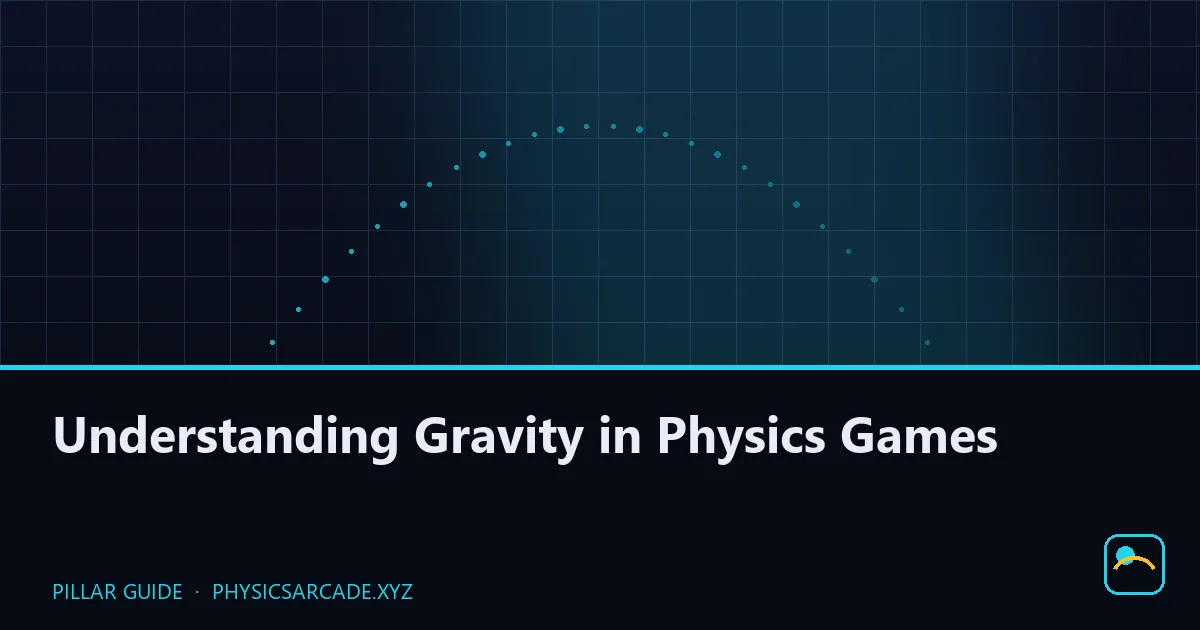
How gravity works in physics games: constant acceleration, terminal velocity, directional and reversed fields, gravity wells, and how to play around them.
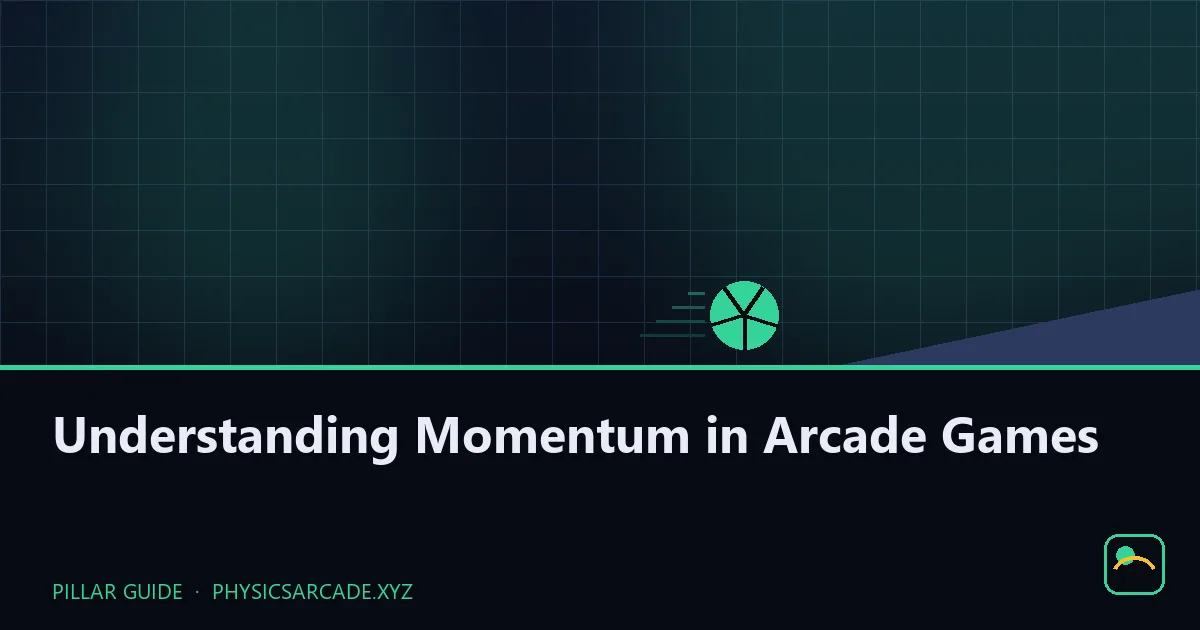
What momentum is, why it makes physics games feel different, how it transfers in collisions, and how to use it rather than fight it.
How games detect collisions, what a contact normal is, how impulses resolve an impact, and why stacks need the solver to run several times per step.
Why friction is the cheapest way to make two levels play differently, how static and kinetic friction differ, and how to handle low-grip surfaces.
Why launched objects follow a parabola, how angle and speed change range, why 45 degrees is optimal, and how games predict trajectories.
What restitution means, why bouncing objects eventually stop, how elastic and inelastic collisions differ, and how games tune bounce for playability.
What centre of mass means, why towers fall over, how torque and lever arms decide a balance game, and how to build structures that stay up.
Why a spring's force rises with compression, why stored energy rises with the square of it, what damping does, and how games use springs beyond bouncing.
Why a pendulum's period depends on length but not on mass, what the small-angle approximation is, and how games use pendulums for timing puzzles.
Why a rope can pull but not push, how constraints differ from springs, why reeling in speeds you up, and how to time a release for distance.
Why physics puzzles feel different from logic puzzles, what makes a good one, and the techniques that solve them faster.
How physics games adapt to touchscreens, why on-screen buttons belong outside the canvas, and what a phone's performance budget means for simulation.
What makes real-time physics possible in a browser tab: canvas rendering, requestAnimationFrame, fixed timesteps and the performance budget.
How a physics engine is structured, why vectors and bodies come first, how collision and constraints fit together, and what to tune when it feels wrong.
Where arcade physics departs from the real thing, why those departures are deliberate, and what a physics game can and cannot teach you.
Concrete techniques for getting better at physics games: reading failures, committing earlier, identifying the dominant force and practising deliberately.
How physics in arcade games developed from simple velocity reversal to full rigid-body simulation, and what each stage made possible.
Every guide follows the same principles. Explain the relationship before the formula. Use the games on this site as worked examples, because a mechanic you have felt is easier to reason about than one you have only read. Say explicitly where arcade physics departs from the real thing.
Physics values in games are tuned for playability rather than accuracy — gravity here is chosen so a screen-height fall takes about a second, not set to 9.8 metres per second squared. The relationships are faithful, and relationships are what build intuition. Our fact-checking policy explains how physical claims are checked, and Real Physics vs Simplified Game Physics is an honest account of where the models stop.